Pouring Concrete During Monterey County's Rainy Season: What Changes Nov-Mar

November 2, 2026
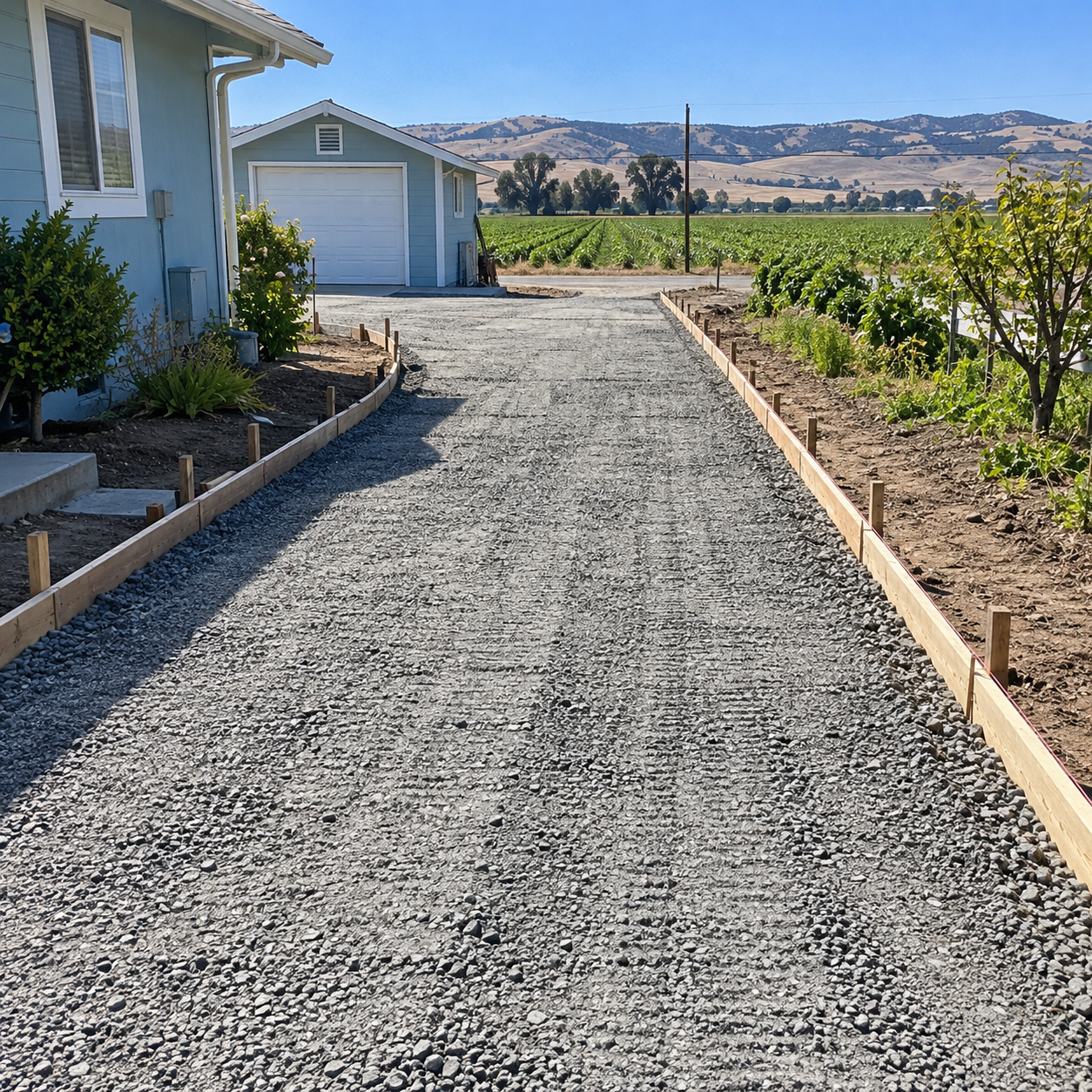
Compacted base rock and set forms ready for a concrete pour on a dry day in the Salinas Valley, CA

Most of the Central Coast's rain falls between November and March. For homeowners and builders in Monterey County, CA, that raises a fair question: can a driveway, pad or foundation still go in this winter? It usually can. The work just has to be planned around the ground, the forecast and the first few hours after the pour.


Waiting until spring has its own costs. A builder with a framing crew lined up can't leave a foundation sitting until April. A family that just moved into a home in Salinas or Gonzales may need a real driveway before the gravel turns to mud, and a grower may want a new equipment pad in place before planting season. Spring is also when contractor calendars fill up fast, so pushing a project back can mean a longer wait than expected.


Below, we walk through what actually changes when concrete goes in during the wet months. You'll see how rain affects the soil under the slab and the surface during finishing, which projects fit the season and which are better saved for spring. We also explain how our crew plans each pour around the storms, so you know what to expect before you book.

What the rainy season changes on a concrete job


We rarely deal with freezing in the Salinas Valley, so cold is not the main problem. Water is. It affects the soil before the pour, the surface during finishing and the schedule from week to week.


The Ground Under the Slab


Much of the valley sits on clay that swells when it soaks up water and shrinks as it dries. Concrete placed on saturated, soft clay loses the firm support it needs. That shows up later as cracks or low spots. A wet subgrade also can't be compacted properly, no matter how good the crew is.


The Pour Day


Rain during placement or finishing adds water to the surface. That weakens the top layer and can leave a dusty, flaky finish. Crews should never work rainwater into the surface to make finishing easier.


The Schedule


Storms on the Central Coast tend to arrive in waves, with dry stretches in between. Those dry windows are when the work gets done. A rainy-season project may take a few extra days from start to finish, even if each step stays the same.

How rain affects fresh concrete, hour by hour


Timing is everything once the truck arrives. Here is what rain means at each stage.

When the rain hits What happens What the crew does
During the pour or finishing Water mixes into the surface paste and weakens it Stop finishing, cover the slab and wait for the shower to pass
First few hours, before final set Drops can pit the surface and wash out the finish Keep plastic sheeting on site and covered edges secured
After final set Light rain does little harm and keeps the surface moist Leave covers on through heavy rain and runoff
Days 1 to 7 Standing water and mud can stain or undermine edges Keep drainage clear and traffic off the slab

Once concrete has set, steady moisture actually helps it cure. The danger window is short. That is why the forecast for pour day and the morning after matters more than the forecast for next week.

NOT SURE WHETHER TO POUR OR WAIT?

Call (831) 710-7943 or request a free estimate for a straight answer on your project. Most new inquiries hear back within 30 to 60 minutes.

Ground prep on Salinas Valley clay


Good rainy-season work starts below the concrete. On our jobs, that means a few habits that hold up whatever the weather does.


  • Excavate to firm soil. Soft, wet material comes out before base goes in. If the subgrade is pumping under foot, the pour waits.
  • Build a solid base. Compacted base rock spreads the load and keeps the slab off the clay. It also drains far better than native soil.
  • Plan the slope. Every concrete driveway installation needs a grade that carries water away from the garage and the house. Winter storms show any low spot quickly.
  • Pump out the forms. Standing water in forms or footing trenches gets removed before concrete is placed.


The same groundwork applies to concrete building pads for shops and ag buildings. Large pads on open land collect a lot of runoff, so site drainage is planned before forms are set.

Which projects fit the rainy season


Footings and foundations often keep moving through winter because builders are on a schedule. Excavations can be pumped and protected, and the pour happens in the next dry window. Our foundations and footings work for additions, garages and ADUs follows the approved plans and inspection schedule in any season.


Driveways, walkways and pads are workable between storms when the base is dry and firm. Decorative finishes are different. Colored or textured concrete patios look best when the finishing and sealing happen in dry weather, so many owners plan those for spring.

Keeping washout out of the storm drains


Rain also carries anything left on a jobsite into the gutter. California treats concrete washout as a pollutant, and the State Water Resources Control Board's construction stormwater program sets the rules for larger sites. On residential jobs, the same idea applies. Washout goes into a contained area, never the street.

How Rancho Concrete plans a rainy-season pour


Every project starts with a site review of access, grade, drainage and base preparation. In the rainy months, we add a close look at the National Weather Service forecast for the Monterey Bay area in the days before the pour. If a storm is coming, we'll call you and move the date to the next dry window.


Plastic sheeting stays on site for every winter pour. You'll have a dedicated point of contact who keeps you updated when the weather shifts the schedule. All of our projects are backed by a 2-year warranty.

Frequently asked questions

  • Can you pour concrete in light drizzle or coastal fog?

    Fog and a light mist usually aren't a problem, and they can slow surface drying in a good way. Steady drizzle during finishing is different. In that case the crew covers the work and finishes once it stops.

  • Should I seal a new driveway before the rains start?

    Not right away. New concrete needs time to cure before a sealer goes on, and most sealers need dry days to bond. A slab poured in late fall is usually sealed once the weather dries out in spring.

  • Will a rain delay change my price?

    A weather delay simply moves the pour to a better day. The scope of work stays the same. Your estimate will spell out anything extra the site needs, such as added base rock on soft ground.

Talk to a Gonzales concrete contractor about timing


Not sure whether your project should go in between storms or wait for spring? Rancho Concrete serves Monterey, San Benito and Santa Cruz counties from Gonzales. We'll look at your site, check the forecast with you and give you a straight answer. See all the areas we serve.


Call (831) 710-7943 or request a free estimate to talk through your project.

REQUEST A FREE ESTIMATE CALL US NOW